- Pivot & Flow
- Posts
- They vote, then they buy the stock

In partnership with

Happy Sunday
For all the headline stress about insider trading on Capitol Hill, Congress performed almost identically to professional money managers last year. Either they're not trading on inside information, or they're doing it badly.
How they traded tells a different story than how well they traded.
Let's dig in…
Congress Ran for the Exits
The headline numbers reveal a legislature that smelled something coming:
Move | Amount |
|---|---|
Stocks sold | $169.6M |
Stocks bought | $125.0M |
Net exit from equities | -$44.6M |
Bonds purchased | $57.4M |
Municipal securities purchased | $32.1M |
Congress trimmed positions in general and they rotated hard into fixed income. The people who write the laws started hoarding government bonds, retail might want to pay attention.

click to enlarge
The selling peaked in March prior to the big tariff reckoning day in April, particularly among House Republicans who dumped significant positions…only to return with aggressive buying in November. Almost like they knew when the storm would pass.
Hindsight is 20/20.
The Tech Split: What Congress Actually Bought
Technology was the most-traded sector, but the strategy reveals something specific:
Sub-sector | Bought | Sold |
|---|---|---|
Semiconductors | $17M | — |
Software | — | $11.7M |
NVIDIA alone pulled in $11.2M from House members. Microsoft got $5M. Meanwhile, they dumped software positions.
This isn't stock picking. This is betting on legislation.
Congress passed the CHIPS Act, which hands tens of billions in subsidies to semiconductor manufacturers. Then they bought semiconductor stocks. Software doesn't get subsidies. They sold software stocks.
They're voting on which sector wins, then trading on that vote.

click to enlarge
The Conflict Zone: Trading What You Regulate
This is where it gets uncomfortable.
Rep. Michael McCaul (TX-10)
co-chairs the Semiconductor Caucus and AI Caucus—he’s called the “architect” of U.S. chip policy. He traded $1.1M in NVIDIA.
Sen. Dave McCormick (R-PA)
sits on Senate Banking, which regulates financial institutions. He sold up to $5M in Goldman Sachs.
Sen. Sheldon Whitehouse (RI)
serves on Senate Judiciary, responsible for antitrust enforcement over Big Tech. His disclosure shows up to $5M in NVIDIA. In 2025, he sold $250K of that position.
Sen. Tina Smith (D-MN)
is on Senate Agriculture, which oversees food nutrition standards and grain subsidies. She sold ~$500K in General Mills.
When the Co-Chair of the Semiconductor Caucus is trading NVIDIA, or a Banking Committee member moves $5M in Goldman Sachs, “appearance of conflict” becomes generous phrasing.
The Crypto Congressman
Rep. Brandon Gill (TX-26)
the youngest Republican in Congress, disclosed up to $2.5 million in Bitcoin purchases in his first six months.
On July 17, the House voted on three crypto bills—the GENIUS Act, CLARITY Act, and Anti-CBDC Surveillance State Act. Gill voted YES on all three. The next day, the GENIUS Act was signed into law. Crypto hit all-time highs.
For comparison: Rep. Mark Green, another crypto-holding Republican, retired July 20. He didn’t vote on any of these bills.
Suspiciously Well-Timed Trades
Trades with unusual timing relative to news events.
Some highlights from last year.
Avoided Losses
Rep. Josh Gottheimer (D-NJ)
sold ICF International on January 30. He sits on the Intelligence Committee. Days later, DOGE announced sweeping USAID cuts—ICF holds major USAID contracts. Avoided: -10.5% vs SPY.
Rep. Sheri Biggs (R-SC)
sold Himax Technologies on March 18. She sits on Science, Space, and Technology. Trade tariff rumors started circulating shortly after. Avoided: -18.4% vs SPY.
Rep. Susie Lee (D-NV)
sold Full House Resorts on March 28. She sits on Appropriations. Weeks later, “Liberation Day” tariffs were announced. Avoided: -21.3% vs SPY.
Captured Gains
Rep. Tim Moore (R-NC)
bought Super Micro Computer on April 30 while sitting on the Financial Services Subcommittee on Digital Assets. Gain: +43.1% vs SPY in two weeks.
Moore also bought Intel multiple times in July and August. On August 22, the U.S. announced it was taking a stake in Intel. The stock has doubled since.
Rep. Sheri Biggs (R-SC)
again… her husband bought “hundreds of thousands” in iShares Bitcoin Trust on July 9. On July 17, she voted YES on the GENIUS Act. It was signed into law the next day. Crypto hit all-time highs.
Rep. Cleo Fields (LA-6)
bought IREN on July 10. On November 3, IREN announced a Microsoft/U.S. government deal. The stock is up +350%.
The STOCK Act Is a Joke
The law says Congress must disclose trades within 45 days. In 2025, that system collapsed:
1,200+ late disclosures
40 different politicians
Some trades hidden for nearly 3 years
The Worst Offenders
Sen. Markwayne Mullin (R-OK) — 953 days late
Disclosed trades from January 2023 on August 13, 2025
That’s nearly three years of hidden positions
Rep. Lisa McClain (R-MI) — 504 late trades in one filing
August 14, 2025 filing contained 504 transactions
Some dating back to March 2024
41% of all late trades in the entire report
Rep. Rich McCormick (R-GA) — 917 days late
Disclosed 33 trades from March 2023 on September 17, 2025
Rep. Shri Thanedar (D-MI)
Filed nearly a year late on MicroStrategy trades
MSTR rose 200%+ after his purchase
The standard defense? “Clerical error.” “Third-party accountants.” Rep. Lisa McClain wrote to the House Clerk that she was “taking aggressive measures to ensure full compliance in the future.” Rep. Michael McCaul’s office blamed “inadvertent spreadsheet cut-off errors.” The same excuse his office used 15 years ago.
The penalty for violating the STOCK Act? A waivable $200 fine. As the Campaign Legal Center put it: a “cost of doing business.”
Today’s Sponsor
Wall Street Isn’t Warning You, But This Chart Might
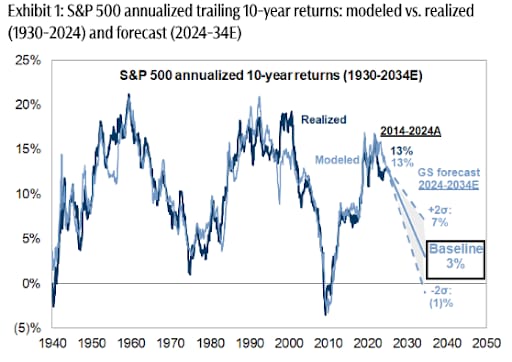
Vanguard just projected public markets may return only 5% annually over the next decade. In a 2024 report, Goldman Sachs forecasted the S&P 500 may return just 3% annually for the same time frame—stats that put current valuations in the 7th percentile of history.
Translation? The gains we’ve seen over the past few years might not continue for quite a while.
Meanwhile, another asset class—almost entirely uncorrelated to the S&P 500 historically—has overall outpaced it for decades (1995-2024), according to Masterworks data.
Masterworks lets everyday investors invest in shares of multimillion-dollar artworks by legends like Banksy, Basquiat, and Picasso.
And they’re not just buying. They’re exiting—with net annualized returns like 17.6%, 17.8%, and 21.5% among their 23 sales.*
Wall Street won’t talk about this. But the wealthy already are. Shares in new offerings can sell quickly but…
*Past performance is not indicative of future returns. Important Reg A disclosures: masterworks.com/cd.
Winners and Losers

Click to enlarge - Hall of Fame: Active Congressional members' portfolio performance vs S&P 500)
Top Performers
Member | Return | Strategy |
|---|---|---|
Rep. Warren Davidson (OH-8) | +78.8% | Concentrated bet on GE and GE Vernova |
Rep. Donald Norcross (NJ-1) | +70.8% | Two-stock portfolio |
Rep. Terri Sewell (AL-7) | +67.9% | — |
Under performers
Member | Return | Problem |
|---|---|---|
Rep. Chip Roy (TX-21) | -59.0% | Single-stock dependence on Atlas Energy Solutions |
Rep. Jim McGovern (MA-2) | -33.9% | Portfolio entirely in Owens Corning |
The top performers didn’t win through frantic trading. They won through concentration. Warren Davidson’s 78.8% came from a bet on industrials. Donald Norcross managed 70.8% with just two stocks.
The worst performers lost through the same mechanism. Chip Roy went down 59% because he bet everything on Atlas Energy Solutions.
High Volume ≠ High Returns
Rep. Marjorie Taylor Greene was one of the most active traders of the year. Her return?
+11.7% — underperforming SPY by 5 percentage points.
Rep. Ro Khanna filed over 3,000 individual transactions.
He has, on record, said that he does not own any stocks, and is a co-sponsor on the Restore Trust in Congress Act to ban congress from stock trading.
(He notes the portfolio belongs to his wife and is managed by a third party. He’s also a co-sponsor on a bill to ban Congressional stock trading.)
Will Congress Actually Ban Itself?
Bills introduced in 2025 to ban Congressional stock trading:
STOCK Act 2.0
ETHICS Act
End Congressional Stock Trading Act
Ban Congressional Stock Trading Act
HONEST Act
Bipartisan Restoring Faith in Government Act
No Corruption in Government Act
Restore Trust in Congress Act
Public support: overwhelming. Former Congress members supporting a ban: 90. Even Trump says he supports it.
The House Administration Committee, chaired by Rep. Bryan Steil (estimated +64% YTD himself), held a hearing called “Taking Stock of the STOCK Act.”
Nothing happened.
They held a similar hearing in 2022.
Nothing happened then either.
Stay curious 🙂
- John
Today’s Sponsor
The Gold standard for AI news

AI keeps coming up at work, but you still don't get it?
That's exactly why 1M+ professionals working at Google, Meta, and OpenAI read Superhuman AI daily.
Here's what you get:
Daily AI news that matters for your career - Filtered from 1000s of sources so you know what affects your industry.
Step-by-step tutorials you can use immediately - Real prompts and workflows that solve actual business problems.
New AI tools tested and reviewed - We try everything to deliver tools that drive real results.
All in just 3 minutes a day
All data is based on publicly available financial disclosures and estimates derived from those disclosures.