- Pivot & Flow
- Posts
- How did Spirit airlines not make it?

In partnership with

Happy Sunday.
Today, we'll talk all things airline industry: Spirit Airlines shutting down, Delta's absurd credit card business, and what happens to retired planes.
Spirit Airlines shut at beginning of May after a failed attempt by the US government to bail out the 34-year-old budget carrier. More on that in a sec.
But first, a less consumer-facing corner of the industry: the business of storing, refurbishing, converting and dismantling planes.
Spirit's headcount has shrunk from 17,000 to under 100, and the remaining executives are figuring out what to do with the company's fleet of Airbus planes.
The boneyard ecosystem
Here's the state of that fleet per USA Today, using Cirium data:
Spirit had 172 planes when it shut down on May 2: 95 in active service and 77 in storage, mostly in Arizona. A majority (124) were leased and will automatically return to the lessor. Some of the 48 owned planes had also been signed over to lessors, so the bankruptcy will only result in a direct sale of a few aircraft.
Many of those active planes flew to Arizona in the days after Spirit closed. Why? The desert climate makes it a go-to for airplane boneyards.
"The sun shines for some 300 days a year," explains The Economist. "Humidity levels hover in the low double digits. It is so dry that the soil, known as caliche, hardens to a cement-like consistency—ideal conditions for storing planes, heavy things whose enemy is corrosion-causing moisture."
Arizona has about 4,000 stored planes across sites including the military's Davis-Monthan Air Force Base (which you may or may not have seen in Transformers) and the commercial Pinal Airpark. Other big storage areas sit in similar climates: Southern California (Victorville, Mojave), New Mexico (Roswell), Spain (Teruel) and Australia (Alice Springs).
How the boneyard ecosystem works, per The Economist:
Storage: $5,000 a month to park a single-aisle plane, $10k for larger jets. Some space-strapped NY and SF readers are probably running the math on living in Pinal Airpark and working remotely.
Disassembly: A large jet like a Boeing 777 has over 130k unique parts (~3m total). Every part needs certification and a full maintenance history to keep its value.
Parts resale: Cockpit instruments get reused in other planes of the same type, and sometimes the whole cockpit becomes a pilot-training simulator. Front-of-plane luxury seats get resold to smaller airlines or collectors. The least desirable parts? Economy seats. They're made from 20-30 different materials and mostly shredded for waste. (Emirates employs 14 tailors to turn old cabin materials into bags and wallets, with proceeds going to charity.)
Refurbish or convert: Older planes stay airborne when smaller carriers, often in developing markets, buy and update them. The other path is converting passenger planes to cargo, which adds 10-20 years: freighters fly fewer hours, so a cheaper second-hand plane beats an efficient but pricey new one.
Spirit's fleet is mostly spoken for, but the few that do go on sale will probably end up with other low-cost carriers… just a boring hand off.
Today’s Sponsor
Pick the 2026 World Cup Winner. Split $1 Million.

Kalshi is running a free tournament contest. Pick which country wins the World Cup, sign up, and if your pick is right, you split $1 million with every other person who called it.
The markets are already moving. Every country has a price, and that price shifts with every result, every injury, every upset. These aren't opinions. They're real money backing real conviction, updating in real time as the tournament unfolds.
Kalshi is the official regional partner of the Argentine National Team and the only federally regulated prediction market exchange in the US. Make your pick and get $10 free to trade alongside it.
Trade responsibly.
Why The Airline Business doesn’t Make Money (and How Delta Makes It Work)
David Oks wrote a sharp piece on why airlines go bankrupt so often. The stats are grim:
From deregulation in 1978 through the end of 2025, the industry has cumulatively lost money: net profit over those 47 years sits at negative $37 billion.
Between 1978 and 2005, more than 160 airlines filed for bankruptcy.
In September 2005, all four of the largest US airlines (United, Delta, Northwest, US Airways) were operating under Chapter 11 at the same time.
Warren Buffett got burned on plenty of airline stocks. In his 2007 letter he wrote (maybe in jest): "A durable competitive advantage [in the airline industry has] proven elusive ever since the days of the Wright Brothers… if a farsighted capitalist had been present at Kitty Hawk, he would have done his successors a huge favour by shooting Orville down."
So what gives? Oks gets into the game theory, and one part stood out: huge fixed costs plus lumpy capacity.
Say you fly San Francisco to Tokyo. Almost all your costs are fixed. The widebody Boeing 787 runs in the low hundreds of millions. Gate slots and landing rights are fixed. Even labor is basically fixed: US pilot, flight attendant and mechanic contracts don't expire, they just roll over until they're replaced. The most variable cost is jet fuel, but airlines hedge it to smooth cash flow, so even that acts fixed.
Now say the route has demand for about 800 passengers a day at a fare that covers costs. A widebody seats 250-300. You and two competitors each fly once a day, putting ~750-900 seats into the market. Fares stay healthy and everyone makes a little money.
But that little bit of margin invites a fourth airline in. Now you've got 1,000-1,200 seats chasing 800 passengers. The efficient number of flights is three or four, but capacity is lumpy: three is too few, four is too many. Fares collapse, margins crater, someone has to exit. Once they do, the market recovers… until someone sees the gap and enters again.
That's the structural trap: even in the best of times, margins are too thin for airlines to recoup their cost of capital.
Because of this, airlines frequently keep flying while in Chapter 11 to cut fixed costs, like renegotiating union deals.
Spirit was profitable in the 2010s, but the broader industry hasn't seen the best of times since COVID. Spirit tried to merge with JetBlue in 2024; the US government blocked it on antitrust grounds. The irony: 80% of the US market is already controlled by four companies (United, Delta, Southwest, American). A JetBlue-Spirit tie-up would have helped the combined company ride out the volatility, including the fuel spikes from the Iran conflict. But we know how that went.
It's a shame, because budget carriers keep the majors honest. In 2010, Spirit became the first US airline to charge for luggage. Unbundling the flying experience let it cut fares to the bone, which also made Spirit ruthless about those baggage sizers at the gate. They were on you like white on rice if your laptop backpack was too big.
That's how we got $25 one-way flights from Atlanta to Spirit's HQ in Fort Lauderdale.
Per WSJ, Spirit had 5% of domestic air travel in 2023 but fell to 1.8% in 2026. When it exited a route, the ticket price rose 23%. Expect some fares to climb.
The American playbook is to avoid a truly competitive market. (Internationally, the most baller national carriers get a lot of government support: Singapore, Qatar, Emirates, Turkish.)
That's why airlines form "alliances" (Star, SkyTeam, Oneworld) to coordinate codeshares and schedules, and why they run hub-and-spoke. The Big 4 funnel flights through key hubs and basically run regional monopolies:
Delta ($47B): Atlanta (then Detroit, Minneapolis, Salt Lake City)
United ($30B): Chicago (then Denver, Houston, San Francisco)
Southwest ($19B): Denver (then Chicago, Baltimore, Dallas)
American ($9B): Dallas-Fort Worth (then Charlotte, Miami, Philadelphia)
New budget airlines break in by dominating secondary airports (how Ryanair took Europe) or specific routes (Allegiant and all things Las Vegas).
How loyalty programs keep America's airlines aloft
The real trick is to basically barely be an airline at all. Just as McDonald's is a real estate company in a burger costume, the Big 4 are credit card loyalty programs with wings.

In 2024, the four largest US airlines made a combined $14B operating profit, almost entirely from credit card issuers paying for points. Every airline ran its actual passenger business at a loss:
Amex paid Delta $1.2B (the airline's entire operating profit for the year)
Citigroup paid American $1.4B
JPMorgan paid United $800m
Incredibly, roughly 1% of US GDP runs through Delta-branded Amex cards. (There was never a Spirit Airlines Amex.)
These programs are floated by the ~2% interchange fees merchants pay, about $160B a year. On a $100 purchase, the issuer takes $2 and usually hands $1.50 back to the customer as points.
Over the past 8 years, Delta and American doubled their revenue from selling points. During COVID, when planes were grounded, the loyalty programs were worth more than the flying operations, and the airlines borrowed money against them as collateral.
One catch: anyone who's been to an airport lounge lately knows these programs are hitting their limits. The Centurion Lounge loses its luster when there's a 27-person line for the pesto pasta (which, to be fair, does slap).
Delta took the "do non-airline stuff" thing to another level. In 2012 it bought a Pennsylvania refinery from ConocoPhillips for $150m and spent another $100m upgrading it. The subsidiary, Monroe Energy, refines 200,000 barrels a day: half into jet fuel, the rest into gas and diesel that Monroe sells or trades for more jet fuel. It now supplies 75%+ of Delta's domestic fuel.
Every other airline and most energy experts laughed. The logic is simple (fuel is 20-30% of operating costs), but running a refinery is way outside an airline's wheelhouse.
Delta made its money back within 5 years, though it's since spent $1B+ on maintenance and the business is very cyclical. Monroe lost $140m in Q2 2020 and Delta nearly sold it. Then the 2022 Russia-Ukraine war sent oil up and Monroe saved Delta a fortune. In 2025 the refinery hit $5B in sales (~8% of Delta's total) and saved about 4 cents a gallon versus the market (~$100m). Thanks to the current Iran conflict, it's expected to add $300m to earnings in Q2 2026 as the gap between crude and refined fuel prices sits at record highs.
So Delta is proving that the most profitable way to run an airline in America is to not really run an airline. No guarantee it saves them from the next bankruptcy (unless they pivot to AI data centers).
Stay curious 😎
- John
Today’s Sponsor
Exclusive Briefing: SpaceX IPO 2026
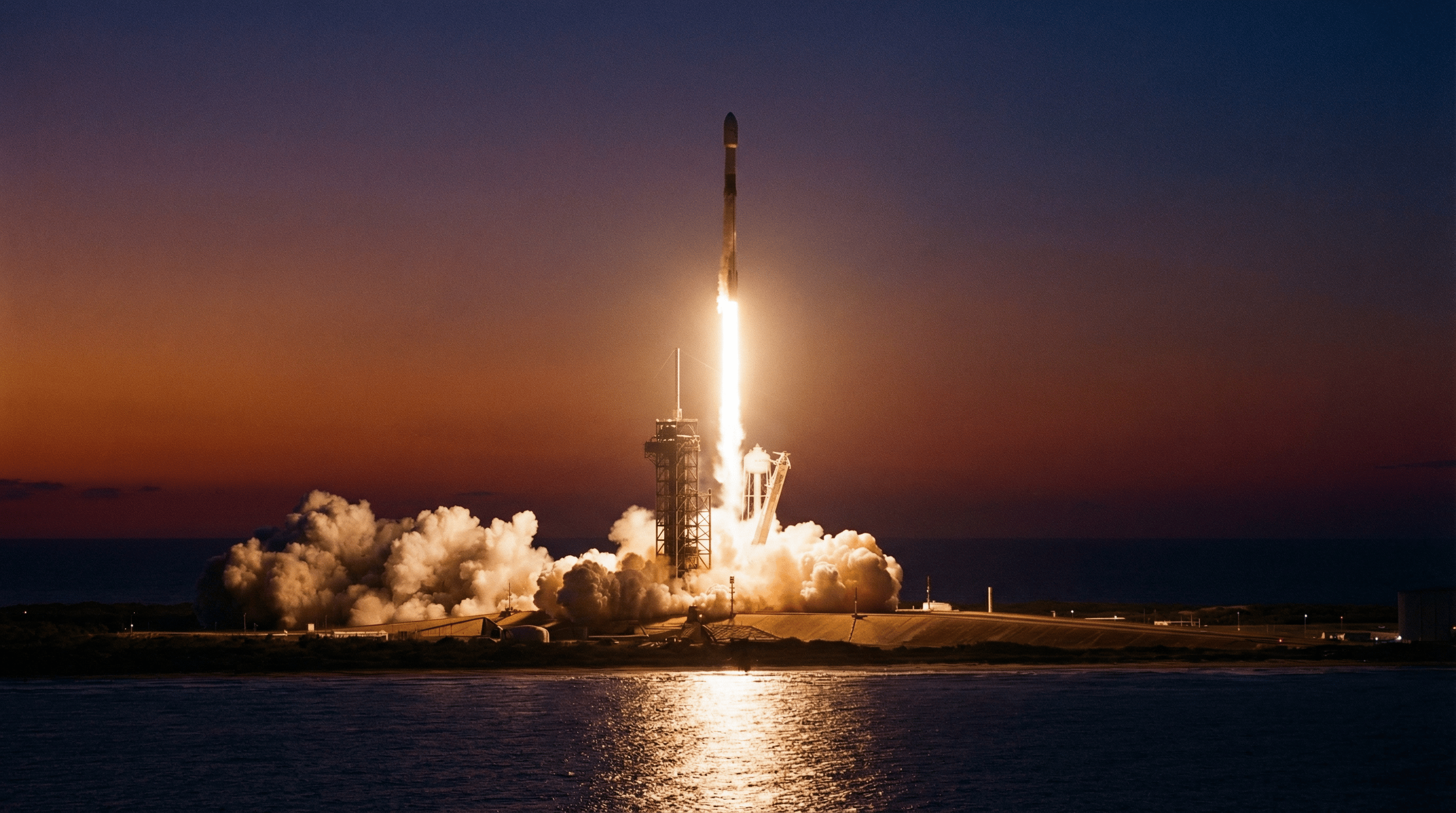
Most retail investors will hear about this after it's too late. Discover the verified signals Wall Street is watching and the access paths most people don't know exist.